The council's four work areas
Our work follows the path clinical data travels: the exchange that moves it, the standards that make it trustworthy, the connected devices that generate it, and the pharmacy and supply systems that act on it.
 Arizona
Four areas, one connected system
Each work area is a hub with its own plain-language explainers. Together they describe how data moves from a device, through a standard, across the exchange, to the point of care — and back out to the pharmacy and supply chain.
 01
01The Network
Arizona's statewide health information exchange — what an HIE is, how records move between providers, the consent models that govern sharing, and how labs, pharmacies and clinics connect.
Read more 02
02Standards
The load-bearing layer: HL7 and FHIR, Unique Device Identification (UDI), GS1 supply-chain standards, and data privacy and security under HIPAA.
Read more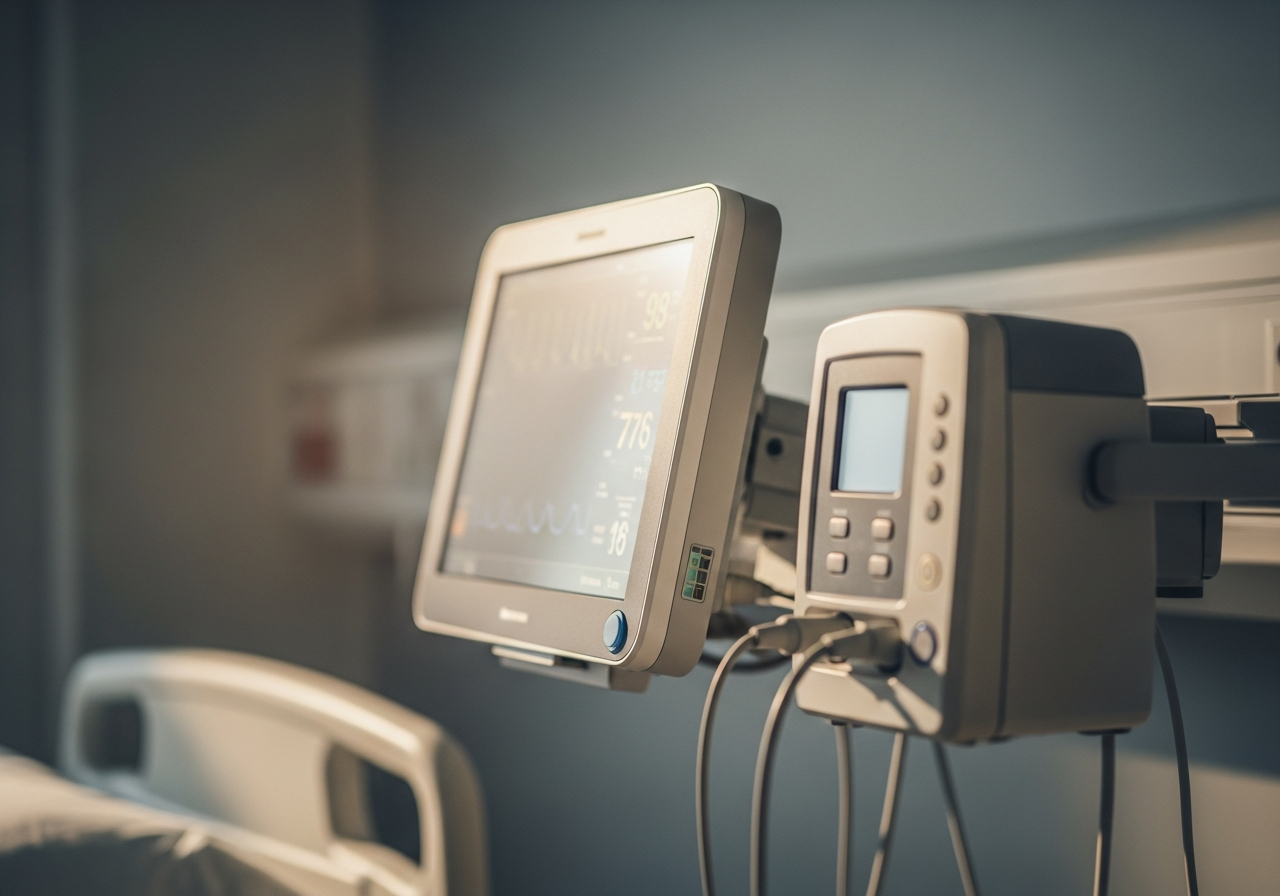 03
03Connected Devices
Turning device data into care — smart and connected devices, remote patient monitoring, device-to-EHR integration, and telehealth equipment requirements.
Read more 04
04Pharmacy & Supply
Closing the loop on medications and inventory — electronic prescribing, pharmaceutical supply-chain integration, automated dispensing, and supply interoperability.
Read moreHow the four areas connect, end to end
The areas are not silos. Read in sequence, they trace a single data journey across Arizona's health system.
A device generates data
A monitor, infusion pump, ventilator or remote-monitoring kit produces a reading. Connected Devices covers how that data leaves the bedside or the home and reaches a system.
A standard makes it portable
HL7, FHIR, UDI and GS1 turn a raw reading or a physical item into something other systems can identify and understand. Standards is the layer everything else rests on.
The Network moves it
Arizona's statewide HIE carries that standardised data between hospitals, clinics, labs and pharmacies — under defined consent and security rules — so the record follows the patient.
Pharmacy & Supply closes the loop
Prescribing connects to dispensing, and supply signals connect to replenishment, so what is ordered, given and stocked all agree — and the cycle informs the next encounter.

If you read only one thing first
The standards layer underpins everything else, and most of it comes back to two from HL7: the established HL7 v2 messaging format and the modern FHIR API standard. Understanding how they relate makes the rest of this site click into place.
Our plain-language primer is written for newcomers — no prior health-IT background assumed.
Have a question about any of this?
For general enquiries, council participation or press, reach out to the council.